Showing posts with label United Kingdom. Show all posts

The United Kingdom is increasingly interested in Chinese

Wednesday, August 10, 2011

One day after the last article about how Chinese still lags behind in Germany comes this one (also in German), about how the popularity of the language is taking off there.

Some info from the article:

One out of three private schools in the UK offer courses in Mandarin Chinese, a boom that comes at the expense of other European languages as subjects.

(standard quote from interview with bright student who says China is the future, skipping that)

While many European companies are reducing costs at home, they are expanding in China. HSBC Holdings said in June that it would do away with 700 positions, and the next month announced that over the next five years it would create 2000 new positions in China and Singapore.

Burberry Group has seen an increase of 30% in turnover in China in the second quarter...China's second-largest trading partner in Europe is the UK, after Germany. PM David Cameron said that bilateral trade would double by 2015, reaching 100 billion dollars.

Some 100,000 Britons learn Chinese, and a total of 54 British universities have Chinese courses. 16% of state schools in 2010 offered Chinese, 4% more than in 2006. Independent (private) schools with Chinese were at 37% in 2010, compared to 2006 when the number was 18%.


No information about how this comes at the expense of other European languages, however.

Read more...

41% of students in London do not have English as a first language, up from 33% ten years ago

Sunday, December 12, 2010

Came across this article just now in Turkish that I'm sure is out there in English as well, which says that according to the Institute of Education and National Language Centre (translated from Turkish so that might not be their exact names) 41% of students in London do not have English as a first language, up from 33% a decade earlier. Of the non-English languages used as a mother tongue, Turkish is in 10th place. A total of 233 different languages are spoken by the 450,000 students in London, and other languages after the 59% that speak English are Punjabi, Arabic, Gujarati, Turkish, French, and Yoruba.

The article ends by saying there are a total of 300,000 Turks living in London.

Now let's see if we can find an article in English on this...here's one. Interesting...looks like Chinese has actually declined over the past decade in contrast to most of the others.

Read more...

Bicycle sales up 350% in the UK last year, total usage in London up 91% over the last decade

Tuesday, September 28, 2010

Here's an article in Spanish I noticed on Meneame today about a huge increase in bicycle sales in London in 2009, the year when the economy was particularly bad. According to the article the bicycle market in 2010 increased to 698 million pounds, or 834 million euros / $1.1 billion (here's an English article on that).

In 2009 there was a 350% in growth of sales, apparently helped by the government's Cycle to Work program which gives tax benefits to those that are employed and rent a bicycle. Apparently the program works by taking a small cut in salary, and then after it's over the bicycle returns to the market at a reduced price.

Three more numbers: cycling in London has increased by 91% over the past decade, and for each new cyclist there is 423 euros (yearly?) in savings due to improvements in health, pollution and congestion. Also, for each euro spent on bicycles the UK receives 4 euros in benefits.

Read more...

Radio interviews from BBC on the proposed British Skylon spaceplane

Saturday, September 25, 2010

Here's a page from BBC definitely worth checking out on the British Skylon spaceplane, a vehicle that would be able to quickly take cargo into space (all the way up to geostationary orbit) every two days or so, landing in the same location and ready to take off again in a very short time. Whether development of the spaceplane will be fully funded is not yet known, but apparently it's almost decision time.

The article has four short radio interviews, and I found the first part of the first one to be particularly interesting as it gives a name to something I've always thought about, the fact that the Earth isn't quite ideal for a spacefaring civilization. Earth is just a little bit too big and massive to achieve escape velocity with your average rocket. I've always also seen the mass and position of the Moon to be another one of the factors here - if it was about the size of Ceres and just 100,000 km or so away (along with a slightly less massive Earth) travel to and from space would have been easy, and our first destination would have been that much easier to get both to and back from.

The name of the paradox is something like the Von Pirkei paradox (not sure how to spell it as it was just spoken once), and is about how once you've gotten away from the gravity well of the Earth (or anywhere else) you're already halfway to anywhere, but the fact that we're in a gravity well as deep as ours has limited access to space to just a few hundred people even almost 40 years after Yuri Gagarin first explored it.

Of course, it isn't that much of a paradox if you think about how NASA receives less than 1% of the US budget, and other space agencies even less. In other words, it's a paradox for the time being simply because we don't care enough to properly fund the technology needed to make getting from the Earth to space and back a normal occurrence.

Read more...

Chris Bryant (former British Minister for Europe): French is useless

Saturday, June 19, 2010

You can see a video of this here, plus articles here in English and here in French. According to him, more useful languages than French are Chinese (Mandarin/Putonghwa), Spanish, Portuguese, and Arabic.

His comments illustrate an interesting mistake people often make when ascertaining the economic value of a language: adding up the total economic clout of a language and then assuming that this then applies equally to one's own country. The other languages he mentions are certainly useful, but generally the most important criteria in determining the value of a language for a country is whether it's spoken by any of the countries next door. This is why Zambia for example has chosen to bring Portuguese into the curriculum, mostly because that's what its neighbors speak. It would have been a mistake for a minister there to conclude that Portuguese would be a useless choice because Spanish is spoken by so many more people, for example. In Britain's case as well French is spoken right next door:


Now, if he wanted to simply make the claim that French is over-emphasized, that may be true. But useless...then again, looking at the video it almost looks like he came up with the word on the spot. Somehow I doubt he would choose to use the same word in a written document.

Read more...

Guess who got promoted to knight today

Thursday, June 03, 2010

Yeah!


One article of many is here.

You may have read about this last year actually, but the actual ceremony was today which is why it's in the news again.

Read more...

Link roundup for 22 May, 2010: Bjørnstjerne Bjørnson and Nynorsk, giant liquid telescopes, parallax, etc.

Saturday, May 22, 2010

Time to get rid of some tabs that have been open for a long while but have never been turned into full-fledged posts. Here goes:

An article here in Norwegian on how Bjørnstjerne Bjørnson (Norwegian writer, composer of the national anthem) hated Nynorsk. The director of the språkrådet thinks Nynorsk would have been in a much stronger position today if it wasn't for him.

Giant liquid telescopes: apparently the two methods whereby a liquid telescope could be tilted a bit would be either through a fake tilt simply involving moving the collecting area to a different spot (effectively reducing the size of the collecting area but still not too bad a technique), as well as using magnets (and probably a more viscous liquid too) to actually tilt it.

On parallax, one of the first benefits in an interstellar mission as it speeds away from the Solar System. In essence, the farther away a mission is the more accurate our estimates of the distance, location etc. to other stars become.

Robot blimps on other worlds - comparing the challenges involved in sending a blimp to Venus, Titan, and Mars. One on Venus would be easy to fly and the only issue would be avoiding corrosion and the high wind speeds, on Titan it would need to be protected against the extreme cold, and on Mars with the thin atmosphere you'd need a much larger blimp, and even then it would only be able to carry a much smaller payload than the others.

High speed rail in Canada and the United States, and the irony of a high-speed rail company (Bombardier) being located in a country that doesn't have it.

This person doesn't like French immersion, in a largely fact-free op-ed.

Offshore energy in the UK could result in the equivalent of a billion barrels of oil annually, matching that produced in the North Sea.

Read more...

UK Green Party shows Canada how to win a seat in a first-past-the-post system

Saturday, May 08, 2010

While I've been a supporter of the Canadian Green Party since it first came to some prominence with Mike Harris, after a while with Elizabeth May as leader I've decided that the party has no future with her at the top given her personality, as she is more of a gambler and underdog type of politician who enjoys a challenge -- even if it means failure -- instead of a sure thing (electing a Green MP for the first time ever). Choosing to run against Peter McKay (losing even after the Liberals agreed not to run a candidate there), spending far too much time attacking Stephen Harper and essentially saying that a vote for any party but the Conservatives would be a good idea (IOW vote for the Green Party...or not, whatever, we're cool with that too), and a weird op-ed about Harper taking a communion wafer and maybe not eating it are some examples of her lack of long-term vision for the party.

Across the Atlantic, however, the Green Party there has shown how to win a seat. The UK Green Party only got 1% of the vote (in Canada it was 6.7% last time yet no seats) and still managed to do this. How? By choosing three districts where candidates had a chance to win, and focusing almost entirely on there. No going up against a sitting cabinet minister for Caroline Lucas.

In the next election too their strategy needs to remain the same, focusing entirely on retaining the one seat they have and hoping for a few more pickups in some key areas. The Liberal Democrats showed last night what happens when a lot of votes are split all over the place, winning just 57 seats compared to 258 for Labour, even though they had 6.8 million votes and Labour just a bit more at 8.6 million. That works out to an astounding 119,000 votes per seat for the Liberal Democrats compared to just 33,000 for Labour. For the Green Party it was 285,000 votes for their one seat.

Read more...

Nick Clegg speaking fluent Dutch / Nick Clegg spreekt goed Nederlands

Wednesday, May 05, 2010

The UK is now only a day away from an election that will end up being...maybe a hung Parliament, maybe a Conservative majority, and probably some gains for the Liberal Democrats as well. Their leader Nick Clegg also has quite a bit of experience in the European Parliament as well, and speaks fluent Dutch along with some other languages. Here he is being asked a few questions in Dutch.

Read more...

UK election debate in Welsh with English subtitles happening today

Tuesday, May 04, 2010

An article here from yesterday mentions that a debate in Welsh will happen later today (it's still 9:30 am in the UK right now) with English subtitles on S4C, and I think this is the link to see it online. Hopefully it will be available not just during the debate but afterwards as well, and I'll update this post if I find out more.

Read more...

Big Latin fight in the UK; meanwhile 40 percent of schools report difficulty in finding Latin teachers

Saturday, March 27, 2010

Remember this and this post on how easy it is to get a job as a Latin teacher for someone who is qualified? It seems there is still a lot of difficulty in finding Latin teachers for schools, with 40% reporting difficulty in finding staff to teach the language. This number takes place amidst a scuffle between mayor Boris Johnson of London and the Secretary of State for Children, Schools and Families Ed Balls over the language's importance. The two being from different political parties and an election soon, the debate is a lot more heated than it might otherwise be. Talk of a mayor head-butting a minister is a tad silly, but it's preferable to Latin not appearing in the news at all.

Some links on the debate between the two over the importance of Latin: here is one on Johnson saying he should head-butt the minister over calling Latin unimportant, and here's another one on Johnson asking schools to add Latin to the state curriculum. The second link shows that 40% of independent primary schools teach the language, compared with just 2-4% of public ones.

Also, according to this 75% of UK state schools with Latin would like to be able to teach more of it to their students, and this school is looking for a Latin teacher as we speak.

Read more...

The UK now has a space agency of its own - UKSA

Friday, March 26, 2010

One of the oddities about the United Kingdom thus far has been that it has never had an official national space agency. Though it has done some work in contributing to aerospace research (about $400 million a year, barely more than Canada), this has been divided among smaller scientific councils and government departments. This is going to change now though, with a new agency set up to consolidate the UK's research and exploration into space.

After consolidation it looks like funding is going to stay about the same, but what will be different here will be the ability to pool all resources into one area which can be used for more impressive projects.

This person has been excited about the idea since last December, when space minister Lord Drayson announced that it would be happening.

It's also nice to see that the government views this as an economic investment too, since the result of the money spent on space agencies is not only interesting but also a very large return on investment given the technological spinoffs it creates.

There are a lot of videos online on this too, such as these two (one short, one long).


Read more...

Lynne Olson on the Daily Show and the beginning of the Anglo-American alliance in World War II

Saturday, March 06, 2010

Yesterday's interview on the Daily Show likely didn't garner all that much attention online, but is worth watching for anyone interested in WWII history:

The Daily Show With Jon StewartMon - Thurs 11p / 10c
Lynne Olson
www.thedailyshow.com
Daily Show
Full Episodes
Political HumorHealth Care Reform

If you're in Canada, here's how you can watch the Daily Show there.

The part about doing a jig once it was found out that the US would be entering WWII after the attack on Pearl Harbor was interesting as rereading John Toland's biography of Hitler I've just gone over Hitler's reaction to it too. The first day he heard about it he was overjoyed at having Japan on his side in such an active way ("We cannot lose the war! Now we have a partner who has not been defeated in three thousand years.")...but then after a few days of rational thought he realized that the end effect of the US joining the war was the freeing up of Stalin's eastern front, effectively giving him a free hand in the west to send troops against Germany, which he did.

Read more...

Affresol's modular houses made out of recycled thermo set polymer

Sunday, February 28, 2010

BBC has a video today on a company called Affresol and the houses they construct (or more precisely: will construct soon) that are made out of recycled materials, lighter and easier to construct but still stronger than concrete. Their home page is here, and some of the specifications on the material used can be seen here. Apparently it is also fire retardant, though there are no hard numbers there to show how it compares to traditional materials in that sense.

Here's the video:


You can also see it in Portuguese or in Russian if you like.

Read more...

Travelers from the UK don't find Spain to be as exotic as before

Saturday, February 20, 2010

That's according to an article in Spanish here, in which the Spanish Tourism Institute says that the number of travelers from the UK has dropped by 15% compared to the year before. Out of 1,327 people that were surveyed, 59% said that Spain "isn't a foreign enough country", while a third said they enjoyed the familiarity that the food and British bars in the country gave them.

Read more...

Eurostat: London has the highest income in the EU, Bulgaria's Severozapaden the lowest

Friday, February 19, 2010

This comes from an article on Euronews here in Turkish and other languages. The spoken news from the video and the written article are quite different so Turkish students may want to skip this one unless you want a challenge.

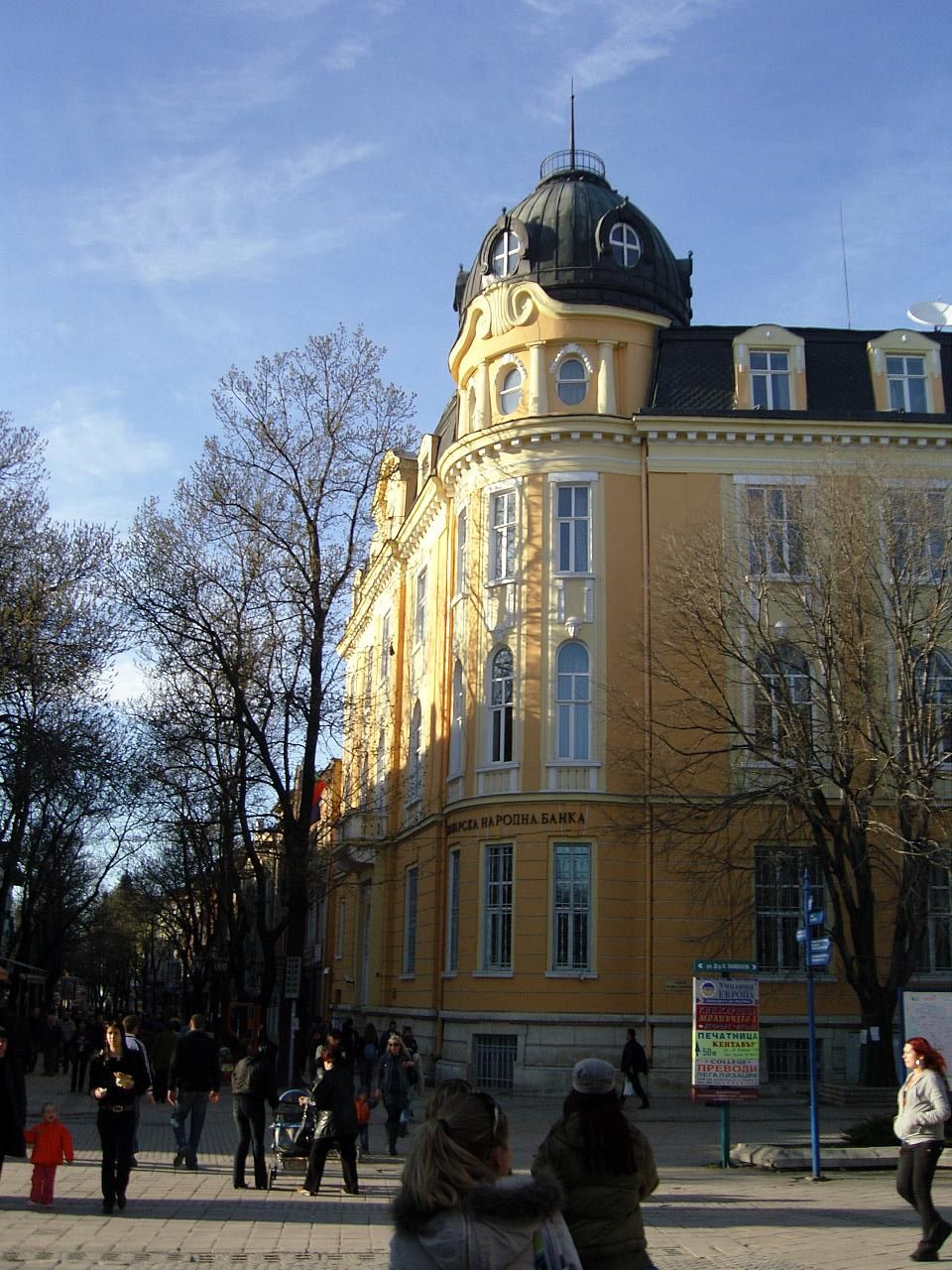
In London, the average income is 49100 euros, while the part of the EU with the lowest income is Severozapaden in northwestern Bulgaria, with an average income of 6400 euros. That's the capital Pleven on the right. An image of the capital with people on the streets can be seen here and here.

Be sure to note that 6400 euros a year is the lowest for the EU, which is a pretty high standard. 6400 euros a year is the average GDP for Turkey, and slightly more than Mexico and Brazil. Input the number into the Global Rich List and it ends up at the top 13.73% in the world. London's average puts it in the top 0.9%, but then again the city is fiendishly expensive to live in too.

The cities with the highest incomes after London were Luxembourg, Brussels and Hamburg, and Prague was the only city in the east to make the top 20.

Read more...

British comedian Richard Herring on reclaiming the toothbrush (i.e. Hitler) moustache

Thursday, February 18, 2010

Here's an interesting interview on British radio with comedian Richard Herring who has set out to see if the toothbrush/Hitler moustache can ever be reclaimed, a similar subject to one I've always wondered over whether the name Adolf will ever be commonly used again. It's also interesting how certain things like the Stalin moustache and the name Joseph haven't really lost any popularity (well, besides the loss of popularity of moustaches in general) in spite of being tied to another person responsible for millions of deaths.


Read more...

92% of adults in the United Kingdom think learning languages is important

Friday, December 11, 2009

That's a single number from a recent poll featured in an article here. The poll was commissioned by CILT, the National Centre for Languages. The languages parents most want their children to learn according to the poll are French, Spanish and German.

Navigating their site a bit provides another recent survey, which shows that language graduates make more money 3.5 years after graduation than those that graduated in Engineering, Mathematical Sciences, Physics, Astronomy and Chemistry.

Read more...

Norwegian energy company Eidsiva Energy buys a plug-in hybrid and a few Think City electric cars

Sunday, April 19, 2009

Hedmark county in Norway, where Eidsiva is located.

There are at least two articles (here and here) on this in the Norwegian press that I found when looking for recent news on Norway's Think. The company has bought a plug-in hybrid which is a specially adapted Toyota Prius, as well as either three or four (says three in one part of the article, four a few paragraphs down) Think Cities. This is part of the company's "environmental offensive".

On the main car:

The car reduces gasoline usage to 0.25 litres per mile, and halves gasoline usage in comparison to today's most efficient cars. While today's cars use 80 percent of their energy to create heat and 20 percent to drive the car, the numbers are the opposite of this with the new car.

And:

Eidsiva has also bought four Think City cars, which could be used by employees to go between cities in the region.

I'm always happy to see new orders for Think's cars as they have a very impressive product but are still in a bit of financial limbo and need every bit of good news they can get. From what I've seen the Think City is the only electric car that not only looks okay and has a good enough top speed and range, but also doesn't cost a mint to buy. Tesla's cars are still too expensive and most other electric car manufacturers somehow succeed in making them look like toys or weird concept cars that honestly would be a bit embarrassing to drive in person.

Also in related news, the UK government is going to offer incentives of about $9,000 (£5,000 ) to buyers of these electric or plug-in hybrid cars starting in 2011. This is right around when Tesla's new sedan will be coming out (although I think sales to other countries will start one year after that).

You can also see an article submitted here to the Guardian today by Elon Musk of Tesla (and SpaceX).

Read more...

Google Maps street view now available for the United Kingdom and the Netherlands

Thursday, March 19, 2009

Great! Here's downtown London to get started:


View Larger Map

and Amsterdam:


View Larger Map

The BBC says that the following cities are now covered in the UK:

Aberdeen
Belfast
Birmingham
Bradford
Bristol
Cambridge
Cardiff
Coventry
Derby
Dundee
Edinburgh
Glasgow
Leeds
Liverpool
London
Oxford
Manchester
Newcastle
Norwich
Nottingham
Scunthorpe
Sheffield
Southampton
Swansea
York

On the Netherlands map it seems to be Amsterdam, Rotterdam and Groningen.

I checked out the view for Scotland by clicking on Edinburgh, and what's the first thing I find? Why, Hector Russel - Kiltmaker.


View Larger Map

Read more...

  © Blogger templates Newspaper by Ourblogtemplates.com 2008

Back to TOP