Showing posts with label Chinese. Show all posts

Lingq just got a lot better

Saturday, August 06, 2016

I just noticed today that Lingq.com now has a new interface, which is nice to see as its script-heavy and kind of early 2000s web 2.0-type design was its weakest point. There are also some new features that I'm still exploring but my favourite one so far is the ability to display traditional characters above simplified ones when choosing Mandarin. It ends up looking like this:


Read more...

PinyinTones is great for writing Pinyin tones

Saturday, February 13, 2016

The title is a tautology but it's true - this is a great piece of tiny unobtrusive software for writing Pinyin tones. It shows up in the language bar, you select it and then type away, hitting 1, 2, 3 or 4 after typing a syllable to select the tone.

Read more...

Discussion in Chinese on Anglish

Saturday, April 26, 2014

I noticed a bit of traffic coming from here last week, a discussion in Chinese of all languages about Anglish, including my proposal that textbooks for Germanic languages be written in Anglish, not English. The suggestion is a bit unrealistic, but to attempt to keep as many Germanic cognates as possible, and even using a few archaic terms, is not. When I did a translation of Aus Martins Tagebuch a month or so ago, for example, the word ereyesterday not only fit vorgestern much better than the day before yesterday, it also fit very nicely underneath.

Though the post is from five years ago I remember the reasons for writing it very cleary: seeing one too many times a textbook for German or Norwegian or something using Romance-derived terminology to explain a word when a Germanic one would have explained it better, and made it easier to remember. For snikskytter in Norwegian for example it's fine to show that the English equivalent is sniper, but if it doesn't mention that it's literally a sneakshooter, it is doing the student a disservice.

Read more...

Chang'e 3 / Jade Rabbit in lunar orbit, landing in one week

Monday, December 09, 2013

It didn't take long for Jade Rabbit to reach lunar orbit, and now the only thing standing between it and our first pictures of the lunar surface in 36 years is the landing. Unmannedspaceflight.com tends to have the most up-to-date information on missions of this type, so keep an eye on this thread.


Also, rabbits are seeing a surge of popularity. No doubt these new owners are all fully aware that a rabbit is about a ten year commitment and not something to go out and buy on impulse.


Read more...

Gwangju to launch Korea's first Chinese-language radio broadcasts

Saturday, July 20, 2013

Found this article in Korean the other day:

Gwangju English Broadcasting (FM 98.7MHz) is set to launch the country's first Chinese radio broadcasts. Thanks to the Korea Communications Commission's multilingual broadcast resolution it adopted, it is set to begin in October a 2-hour daily Chinese-language program. The program will have information on daily life, the region, national news, news on China, among others.

There are 22,000 Chinese citizens living in the Gwangju / Jeonnam region.

Gwangju English Broadcasting began in April 2009 with all English broadcasting, but of the 63,000 foreign nationals living in the region a full 35% of them are Chinese.

Listeners will be able to hear the Chinese broadcasts through radio stations in Gwangju, Seoul, and Busan.

Gwangju is one of Korea's larger cities, the sixth-largest (fifth if you count Seoul, Incheon and the rest as a single megalopolis) and located in the southwest corner.


View Larger Map

Read more...

President Park speaking in Chinese

Tuesday, July 16, 2013

Here's what it sounds like - not too bad, yet fairly stilted. I get the impression she has a fairly good command of regulac (non-speech) Mandarin and is a bit nervous 1) using less familiar vocabulary, and 2) talking in front of an audience. Even for a president who is also the daughter of another president, talking in a half-fluent foreign language can be intimidating.

Read more...

Pope's Twitter to add Chinese and Latin

Friday, December 21, 2012

Two new languages are planned for the Pope's Twitter feed, Chinese and Latin. Neither is too much of a surprise in that Chinese is a no-brainer for PR and Latin is basically a must. Latin is particularly nice to see, however, given the lack of places to read and use it. Latin students and revivalists should follow that Twitter account, along with any other 100% Latin Twitter account around.

While we're at it, let's see how the number of Twitter followers has changed since those I wrote on December 7th. Dec 7 numbers will be on the left, today's numbers on the right.

English: 523,000 -- 1,262,000
Spanish: 119,000 -- 483,000
Italian: 62,000 -- 206,000
Portuguese: 20,000 -- 54,000
German: 14,000 -- 40,000
French: 12,000 -- 48,000
Polish: 6,000 -- 21,000
Arabic: 5,000 -- 15,000

All the standings are the same except for French which has moved up one place.

Read more...

HSK levels 4 and 5

Thursday, November 22, 2012

Personal announcement today: One month ago I took the HSK (汉语水平考试), and now that 30 days have passed the test-takers have been given their scores. I took levels 4 and 5 (the highest is 6), and found out yesterday that I passed both:

HSK四级 2012-10-21 -- lv. 4
听力 94.0 (listening)
阅读 92.0 (reading)
写作 80.0 (writing)
总分 266.0 (total)

HSK五级 2012-10-21 -- lv. 5
听力 89.0 (listening)
阅读 79.0 (reading)
写作 82.0 (writing)
总分 250.0 (total)

A perfect score is 300, 180 and above is a passing grade. The test itself is exactly the same format as the practice tests that can be downloaded (chinesetesting.cn, other places such as Lingq have them too), right up to the same recorded voices you hear in every one. The man and woman that always end up being a 小刘 (Xiao Liu) or 小王 (Xiao Wang) or whoever with the Beijing accents comprise the whole of the dialogues.

The content of the test is similar to proficiency tests in other languages in that it's formal and not entirely natural, not something you'd want to base your entire study of the language on but on the other hand a great way to focus for the months leading up to the test. Having finished 4 and 5 I don't really feel the desire to plunge straight into 6 just yet - HSK content is something you want to take a break from when you can and Chinese Pod and Fluentflix (now called FluentU) is much more fun.

One last note about the test: timing between these three sections is not quite ideal. Listening is unchangeable as you simply follow along answering the questions until the recording is over, but I had barely enough time to get through reading in lv. 5 (and I'm a fairly fast reader), while writing I had enough time to do it as slowly as I wished, erased a few parts and rewrote another few, and still had 15 minutes to spare at the end. It might have been possible to go back to the reading section but 1) I wasn't sure if it was permitted and there were only two of us in the room, and 2) after two tests in a row I simply didn't feel like doing anything but staring at the wall.

HSK level 5 is said to be equivalent to a C1 for European languages, but that's debatable.

Read more...

Spain has a particular liking for Chinese

Friday, November 16, 2012

From here in Spanish, an article with only about two citeworthy sentences:

According to data from the latest Eurobarometer, 24% of respondents in Spain (compared to the European average of 14%) believe Chinese should be the second language their children choose to learn. The survey shows that 13% of those in Spain believe Chinese to be a useful language for personal development, compared to 6% for Europeans in general.

Now where is that latest Europeans and their Languages from Eurobarometer? A quick search turns up one for 2006....ah, here's the one the article references (pdf) and it's actually from June. The bit about Spain liking Chinese in particular is not just because it's a Spanish article, as the paper itself references Spain here a number of times:
Respondents in all Member States are at least as likely, if not more likely than they were in 2005, to think that Chinese is useful for personal development. The most notable increases in the share of those mentioning it as an important language are in Spain (+11 percentage points) and the UK (+9 points).

Respondents in EU15, compared with those in NMS12, are particularly more likely than those in NMS12 to think that Spanish (17% vs. 3% respectively), French (18% vs. 8%), Chinese (7% vs. 1%) and Italian (5% vs. 3%) are important.

Those countries with the greatest likelihood of respondents thinking Chinese useful are Spain (13%), the UK (11%) and Ireland (9%).

...in some Member States, the perception that it (Chinese) is useful for children has increased much more than the perception that it useful for personal development. Countries with the most notable increases in the proportion holding such a view are Denmark (+25 percentage points), Spain and France (+23 points in each) and Ireland and the UK (+18 points).

Member States where the view that Chinese is a useful language for children to learn is most widespread include France (28%), Denmark (26%), Spain (24%) and the UK (23%).

and so on.


Read more...

Chinese to be taught in Sao Joao da Madeira primary schools in 2013

Thursday, November 15, 2012

Buried near the end of this article in Portuguese about how the Chinese city of Anshun (安顺) wants to have a more European-like architecture with Porto as a model, we find the following:
Starting in January next year, students in the third grade in primary schools in São João da Madeira will begin to learn Mandarin. At the beginning of the 2013 / 2014 school year, children in the 3rd and 4th grade in nine primary schools will begin to learn the language.

The legislature in São João de Madeira hopes to be given authorization by the Ministry of Education to create bilingual Portuguese-Mandarin classes from the 1st to 12th grade in public schools in the city. The number of classes will depend on the demand, and the pedagogical model will follow the steps of the best bilingual private colleges in the country such as Colégio Alemão, the Lycée Français, or St. Julian's School.

That's not all - the legislature is willing to support 50% of the costs of Mandarin in the Instituto de Línguas for children and adults living in the city. "It will be a huge asset for São João da Mareira and for this region if, in 10 to 12 years, there are 200 to 300 people that can speak and express themselves correctly in Chinese", said Castro Almeida when announcing the initiative.

200 to 300 = one person in a hundred in this city of 21,000.

Read more...

Link roundup for 10 November 2012

Sunday, November 11, 2012

First an interesting event from yesterday - at the local book store where a section is decked out in Hobbit-related literature and items for the upcoming movie, I found the following:


(Taken with a webcam as can't be bothered to find the real camera in the closet at the moment)

Hobbitus ille - The Hobbit in Latin. After buying it I've read a few reviews that say the translation is lacking in places. I'm not one to judge, though, and I have purchased it more to aid the revival of Latin than anything else, as I have no room to fit Latin into my schedule at the moment. I will skim through it while comparing it to the original English though just to get a feel for it. On that note we get to the next link:

--- Students learning introductory Latin at the University of Western Australia have increased by 150% this year. Want to know more? You can't without a digital pass, which I will not be getting.

--- Crecé interés por el mandarín - an article on the increasing interest in Mandarin in Paraguay. Slightly different from your average "the Confucius Institute is growing" article because this one is about Taiwan's role in teaching the language abroad.

--- Old Papiamentu text on a child's Dutch letter. Mi Alma dousje, Mi Courasson, Mi dousje, Mi bieda, Mi courasson.

--- An article on someone's experience using Memrise to learn about a thousand Lingala words to talk to pygmies in northern Republic of the Congo.

--- An article in French on how to save the Corsican language. Lots of discussion but no conclusion by the end on how to proceed.


And finally a link provided by a reader: a simple search displaying language programs for languages that are offered in North America. Entering Uzbek for example turns up 16 schools that offer it in the United States, Kalmyk is non-existent (no surprise), Kyrgyz gives five results, Cree gives 14 results all in Canada, Estonian gives 9 results.

Read more...

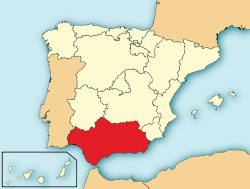
Number of students learning Chinese in Andalusian language program up by 20% over one year

Friday, November 09, 2012

From here in Spanish yesterday on a Chinese language program in Andalusia. This one looks to be funded by Andalusia itself and doesn't seem to have anything to do with the Confucius Institute:
The number of students enrolled in the Chinese language in the autonomous community of Andalusia has increased by between 15% and 20% compared to the past year in which, for the first time, the subject was offered outside school hours in a total of 10 public primary and secondary educational centres. In the 2011/2012 there were 658 students enrolled in Andalusia, meaning that the current number should be 780...Classes are taught by Chinese teachers in selected centres in Andalusia with a workload of 20 weekly hours in the afternoon.

Read more...

German, Portuguese, Chinese, Japanese, English on the rise in Galicia

Thursday, October 25, 2012

From here in Spanish:
Students studying in one of the EOIs (Escuelas Oficiales de Idiomas) in Galicia have increased by 38.8% in the last four years, reaching 32,256 in the academic year 2012-2013...Data from the Xunta also reveal how language preferences have changed.

German is the language that has gained the most adherents with a 96.2% increase since 2008, reaching 1415 students. Following German is Portuguese with an increase of 71.1%, and Chinese with a 70.7% increase. The number of students studying Japanese has also increased by 62%, English by 40%,

Russian by 35%, French by 24%, and Italian by 18%.
I've separated Russian and the rest from the others as they have gained by less than the 38.8% gain in the total number of students, thus losing ground proportionally to the others.

Read more...

Jeju-do...still needs lots of Chinese interpreters

Sunday, September 23, 2012

A bit of a continuation of this article, but with some different (though largely similar) numbers:

Numbers of Chinese tourists visiting Jeju-do are booming, but the lack of tour interpreters is causing side effects.

In particular, problems have arisen such as some travel agencies hiring unqualified people such as overseas Chinese or ethnic Korean Chinese citizens to do the job.

(Note: What's wrong with that? If there is a desperate need and a person that fills it, that person should be able to get the job.)

According to numbers given on the 20th, the number of Chinese tourists visiting Jeju-do by the end of last year was 570,000. This year there were 580,000 tourists by the end of July. However, though one interpreter is needed per 20 people, there is a total of only 129 of them in Jeju-do.

In May there were a total of 1,163 registered / qualified guide interpreters, but the number of active ones was just 379. Of those 14 were for English, 236 for Japanese, and 129 for Chinese.

Last year, 356 interpreters would have been required for the 570,000 Chinese visitors. If the number reaches 700,000 it will require 438 interpreters, 1 million 625 tourists would require interpreters, and 1.5 million tourists would require 938 interpreters.

The amount of money made by Chinese interpreters is 150,000 won per day ($130), much higher than the 100,000 won ($90) made by English and Japanese interpreters. The cost is one of the reason why interpreters are being hired from elsewhere.

It then ends with some strategies to keep 'unqualified' interpreters from getting these jobs and doing unqualified interpreting - more testing and qualifying on the government level, and keeping an eye on those travel agencies that hire the unqualified interpreters.

Good luck trying to meet the demand without going outside the local population - Jeju-do has a total of just 530,000 people and every 500th person is going to need to be a Chinese interpreter to meet future demand.

Read more...

Mandarin to be taught in public schools in Nigeria starting next year

Wednesday, September 19, 2012

From here in French:

The announcement was made on September 10 2012 by the Commissioner of Education in Lagos State (Mrs. Olayinka Oladunjoye): Mandarin, the official language of the People's Republic of China, will be taught in public schools starting the next school year. This is the result of a meeting held with a delegation from the Confucius Institute at the University of Lagos..."The Institute is ready to assist the State with the necessary logistics to make the teaching and learning of the language easier."

After that a bit about how it will help with globalization and economic competitiveness, etc., what one would expect to hear with an announcement like this.

Read more...

Korean show for learning Chinese and English at the same time

Wednesday, September 12, 2012

Here's a Korean show combining Chinese with English that I came across randomly on YouTube, something we can expect to see more of in the future:


Not sure how effective mixing two languages like this would be compared to concentrating on one at a time, but I can understand the desire to want to kill two birds with one stone this way.

Read more...

Enacting mandatory Mandarin from grades 1 to 12 in Georgia's Macon and Bibb County

Sunday, September 09, 2012

Here's something I didn't know about - a county in Georgia has just begun enacting mandatory Mandarin courses from grades 1 to 12. I don't have much to add to the NPR article and podcast on it except that the future of this really depends on the implementation. Having aid from the Confucius Institute should make it a much easier process than otherwise, and the teachers are not expensive to hire.

The superintendent is often asked why he has chosen to make Mandarin mandatory instead of Spanish in a county where the Hispanic population has doubled over the last census period, and his answer I find to be a bit lacking: that the county needs to concentrate on the future, not the past. A better argument: Spanish is the easier language to pick up through local exposure, whereas Mandarin is one that requires more active investment and attention if one wants to bring a full student population to functional fluency. No reason to imply that one language is the language of the past when demographics show that it clearly is not.

By the way, 150+ comments below.

Read more...

Hyundai Kia moves English to second interview, likes proficiency in other languages too

Thursday, September 06, 2012

An article here in Korean goes over some of the hiring practices for Hyundai as it gears up to hire another few thousand employees this year. English proficiency is a given but a few things have changed that are worth noting.

Hyundai Motors is looking for 3430 employees the second half of this year, 540 fewer than the 3970 last year.

One difference in the interviews done this year is that the English test has been moved from the first interview to the second, in order to give applicants a better opportunity to focus on core and job competencies.

Applicants with proficiency in various languages such as Chinese, Portuguese and Russian are rated highly by the company.


Read more...

Loving Fluentflix so far

Friday, August 31, 2012

I just got an invite to fluentflix.com this morning and have been trying it out. The site is wonderful. It's based on a simple concept: transcripts for videos in Chinese already uploaded to YouTube, but with a ton of features on top of this. Each video has a dialogue below it (hanzi, pinyin and English translation) that scrolls over one sentence at a time, with a fast forward and rewind button to skip forward or back. When you hover the mouse over a word the video stops and the meaning of the word appears. If you decide that this is a word you want to learn then you click on it and add it to your list.

Later on when looking at your list, it also shows the video where the word comes from, and when you click on that you can hear the single section (a few seconds in length) where it appeared, on automatic repeat. That's my favourite feature so far. It also offers the ability to download them all as a pdf, with or without extra example sentences, and this then becomes your personal list of new vocabulary to focus on.

The site is well set up for other languages too (including the name), and hopefully we'll see those later on. The site owner has told me that they would like to do so, though no firm indications on when. I'm sure they are busy enough with a single language and working on too many projects in the beginning is always a recipe for disaster.

Apparently the public beta begins in a few days.

Read more...

Slovenia to introduce Chinese in all primary and secondary schools

Wednesday, August 15, 2012

That's according to this article in Italian. Seeing this in Slovenia is no surprise, given its predilection towards learning other languages.

From September when the new school year begins, all primary and secondary schools in Slovenia will offer the possibility to study the Chinese language as an optional subject, according to the newspaper Dnevnik. Students in the last three years of primary school (which ends at 14 years of age) and all secondary schools will have the opportunity to study the language spoken by 1.5 billion and studied by 40 million people throughout the world. If interest this year is satisfactory the Ministry of Public Education in Ljubljana is considering adding Chinese to the three languages compulsory to study in secondary school: English, German and Italian.

Read more...

  © Blogger templates Newspaper by Ourblogtemplates.com 2008

Back to TOP