Showing posts with label Portugal. Show all posts

Galp Energia CEO believes oil will improve geopolitical position of Portuguese

Monday, March 24, 2014

Publico has an interview with the CEO of Galp Energia, a Portuguese energy firm with about 7000 employees, who believes upcoming production of oil in Brazil and gas in Mozambique are a good sign for the geopolitical importance of the Portuguese language.

Taking a look at the firm's worldwide presence shows a large similarity to the Portuguese Empire. Where the company operates:


and the Portuguese Empire:


Much of the article is about the company itself and its partner Sinopec. Taking that out and condensing some of the more general parts the executive summary is:

The CEO of Galp Energia, Ferreira de Oliveira, believes that Brazilian oil and gas from Mozambique will change the perception the world has of the CPLP (Community of Portuguese Language Countries). Galp expects to produce 300,000 barrels of oil per day in 2020, 80% from Brazil. In the past year the company invested $600 million in oil exploration there. Most of the production is to take place in the Lula and Iara fields, and production will begin in 2017.

Q: Will Brazil continue to be the main priority for Galp Energia, or will it move to Angola, or more likely, to Mozambique?

A: "In the Lusophone countries, especially in Angola, Mozambique and Brazil, from 2006 to today, we have seen 26% of all new discoveries of oil and gas. If we count only deepwater discoveries, they make up 52%. The rate of growth here will be explosive. I have no doubt that this decade in which we are living will position the CPLP geopolitically in the world. Mozambique is now developing the largest gas project in the world, and Brazil the largest oil project in the world. Being in these two projects is an enormous privilege and a huge responsibility.

Read more...

East Timor to get a Portuguese Language Institute

Saturday, January 18, 2014

From here in Portuguese:

The Insitute for Cooperation and Language and the National University of East Timor signed a memorandum of understanding today in Lisbon for the creation of a Portuguese Language Institute in East Timor.

From 15 February, ten Portuguese teachers will ensure the teaching of the Portuguese language at the University of Timor, and the creation of the institute has particular relevance because Timor will assume the presidency of the CPLP in the first half of this year.

Read more...

Draft law passes Galician parliament calling for stronger Portuguese-language ties

Wednesday, May 22, 2013

From here in Portuguese:

The Galician parliament unanimously approved the consideration of a draft law of a popular initiative calling for greater weight of the Portuguese language in the Spanish autonomous region. 
More than 17,000 Galicians signed a petition for more "access to the wealth of the Portuguese language". The initiative now passed puts into consideration the teaching of Portuguese in Galician schools, better use of the language in Galician public institutions, transmission of TDT (Televisao Digital Terrestre) television channels from Portugal, and access to national radio frequencies from the other side of the border. 
There is still no timetable for the proposal, which advocates the introduction of the Portuguese language at all levels of education, to become law, but Xosé Carlos Morell (the proponent of the initiative, known as Iniciative Paz Andrade) believes that a four-year period would be reasonable for the implementation of Portuguese in Galician schools.

Looks like the Facebook page for the initiative is here.

Read more...

Brazil may delay implementation of orthographic accord

Sunday, December 09, 2012

From Público yesterday:

The Brazilian government is preparing a presidential decree to postpone the mandatory term of the orthographic accord to 31 December 2015. The extention of the accord, originally scheduled for January 2013, should be done by next Wednesday. The text of the presidential decree is ready at the Ministry of Foreign Affairs and is waiting for the signatures of Antonio Patriota and Dilma Rousseff.

We're not in any condition to bring it in force on the first day. The accord is a 'patchwork quilt' and many teachers still don't know how to apply it, said senator Cyro Miranda to Lusa.

The postponement emerged from a public hearing with Portuguese language teachers who criticized the accord and made a petition with more than 20,000 signatures against it.

Besides the postponement, the senator said he believes the text of the accord will be revised:  "The orthographic accord is very confusing. I believe that both Portugal as well as Brazil will ask for it to be revised.“

I personally don't see a huge need for the spelling reform - while it is true that Spanish is written in one way worldwide and so is French, English has a number of differences from country to country that have not done a thing to impede its status as a world language...and the Portuguese accord wouldn't bring all written Portuguese in line anyway:

Na prática, o acordo estabelece uma unidade ortográfica de 98% das palavras, contra cerca de 96% na situação anterior.

By the way, I've seen a lot of these Telecurso Portuguese language lessons in my inbox lately and they're quite a lot of fun if Brazilian Portuguese is the kind you prefer:


Read more...

Chinese to be taught in Sao Joao da Madeira primary schools in 2013

Thursday, November 15, 2012

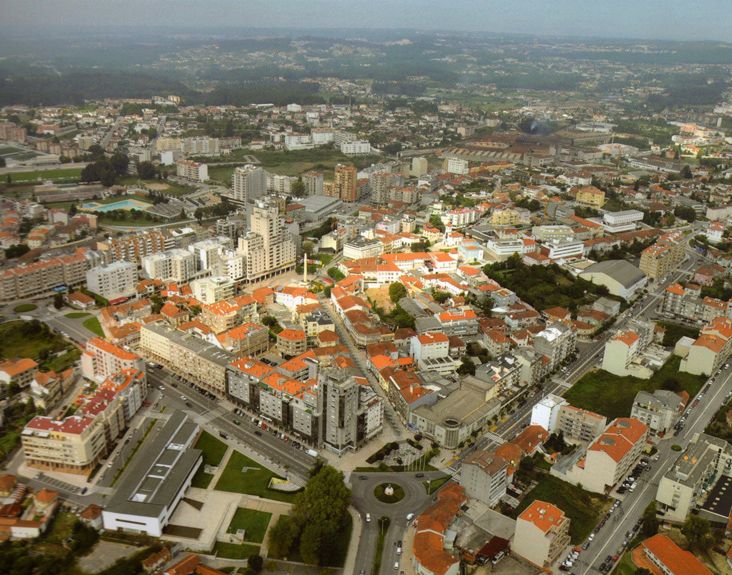
Buried near the end of this article in Portuguese about how the Chinese city of Anshun (安顺) wants to have a more European-like architecture with Porto as a model, we find the following:
Starting in January next year, students in the third grade in primary schools in São João da Madeira will begin to learn Mandarin. At the beginning of the 2013 / 2014 school year, children in the 3rd and 4th grade in nine primary schools will begin to learn the language.

The legislature in São João de Madeira hopes to be given authorization by the Ministry of Education to create bilingual Portuguese-Mandarin classes from the 1st to 12th grade in public schools in the city. The number of classes will depend on the demand, and the pedagogical model will follow the steps of the best bilingual private colleges in the country such as Colégio Alemão, the Lycée Français, or St. Julian's School.

That's not all - the legislature is willing to support 50% of the costs of Mandarin in the Instituto de Línguas for children and adults living in the city. "It will be a huge asset for São João da Mareira and for this region if, in 10 to 12 years, there are 200 to 300 people that can speak and express themselves correctly in Chinese", said Castro Almeida when announcing the initiative.

200 to 300 = one person in a hundred in this city of 21,000.

Read more...

Russian World Foundation opens first centre in Iberian Peninsula, in Portugal

Monday, October 29, 2012

From here in Spanish:
In Portugal in the University of Coimbra, one of the oldest centres of higher education in Europe, the first Russian language centre in the Iberian Peninsula was opened.

Vasili Istratov, vice director of the Russian World Foundation (Russkiy Mir Foundation), said upon his visit to Portugal: "It is a special honour for us, having the Russian centre opening in such an ancient and glorious university. This is our 89th centre we've opened in the five years of history of our foundation. It is the first in a Lusophone area (if you don't count Macao) and the first in the Iberian Peninsula, since there is no such centre in Spain yet.

Read more...

Norway looking for 5000 Portuguese engineers

Friday, October 05, 2012

An article here in Portuguese today on two themes sometimes followed here - the need for engineers in countries like Norway and Germany, and the exodus of talent from Portugal. In spite of a different language, going to Norway to work probably feels like less of a true exodus than somewhere like Brazil or Angola - a flight from Lisbon to Oslo is just three and a half hours. In contrast, Brazil is about ten hours away and Angola about eight hours. Then there are also the various supranational bodies in and around the EU such as the Schengen Treaty that both Norway and Portugal are members of:


So, to the article:

Numerous job offers from abroad are arriving at the Order of Engineers. International companies are seeking professionals from all sectors of engineering, and are even asking the Order to make the selection for them. The last major bid that arrived at the Order was from Norway, seeking 5000 engineers.

The Order does not make selections, but divulges the offers that arrive. Norway is one of the countries where professionals in the area are most lacking, similar to Germany, Mozambique and Angola (Luanda).

The article then provides a helpful link for those that are interested in applying for a position as an engineer there.

So which languages gain in a situation like this? 1) English (will certainly serve as the common language between a Norwegian employer and Portuguese engineer), 2) Norwegian (many engineers may opt to learn the language due to encountering it outside of the office all the time).

Read more...

Billy the scarf, can't live without Brazil, Latin in Germany

Thursday, September 27, 2012

--- A good example of how good language learning materials have become lately, for the largest languages at least.

--- It's impossible to live without Brazil: an article in Portuguese on the role of Brazil in the Lusophone world, vis-à-vis China in particular.

--- I recently mentioned that Latin is undergoing a boom in Germany; now Deutsche Welle has written an English article on the subject.

Read more...

Luso Canadian Charitable Society and Instituto Camões break up in Toronto

Monday, September 10, 2012

Here's how they broke up, one year after it began. The Luso Canadian Charitable Society believes it's better off without Camões, and is even planning an expansion.

Questioned by Lusa, Ana Paula Ribeiro (Coordinator of Teaching Portuguese in Canada) explained that the protocol on which the Portuguese Language Centre in Toronto was founded "was to be terminated because the Luso Canadian Charitable Society said they would not be able to comply with the conditions established therein."

Under the agreement, the Instituto Camões was to assume the pedagogical and didactic responsibilities and the Luso Canadian Charitable Society was given responsibilities for financial management of the project and provision of the real estate for the school.

The Centre in Toronto began activities in September, with an average of 60 students for 2011 to 2012.

The end of the partnership was confirmed by the president of the Luso Canadian Charitable Society, stating the "inability to respond to the number of requirements imposed by the Institute Camões." However, "our Portuguese language school will continue to function without the Instituto Camões. We are keeping the same director that we had until now."

He announced on the other hand an expansion of the project teaching Portuguese with the planned opening of another school located in Hamilton, 70 km from Toronto, "which will cost two million dollars" (Canadian).

Read more...

Link roundup: 29 July 2012

Monday, July 30, 2012

-- Let's begin with an Italian article on the city of Serafina Correa in Brazil, where the two official languages (either permanently or for a week-long festival in the summer, not sure which) are Portuguese and Venetian. The original decree from 1988 on making the language official for that week is here as a pdf.

-- A reminder that there is an astronaut running for Congress this November.

-- Trips to the Gaeltacht are declining, from 28,000 in 2008 to 24,000 this year. Economic conditions are to blame here, and there is no reason to doubt the claim: when times are tough, 750 to 900 euros for a three-week course is probably one of the first items that one would cut from one's household budget.

-- On the Alqueva Dark Sky Reserve, in Portuguese and in English.

-- Evidence for Titan's large underground ocean: its 'squishiness' involving its shape changing by 10 metres due to Saturn's gravitational pull, which is best explained by such an ocean. Here we see one of the benefits of the long-term observation of the moon Cassini has and is continuing to carry out.

-- Why Enceladus is thought by many to be the best destination for finding life. Not that other destinations such as Europa could not have life as well, but Enceladus is the only such destination that constantly sprays these samples out onto the surface like a geyser.

Read more...

Portugal to oppose Equatorial Guinea's membership in the CPLP

Friday, July 13, 2012

From here in French:

The Portuguese Minister of Foreign Affairs Paulo Portas said yesterday in Lisbon that Portugal would oppose full membership for Equatorial Guinea in the CPLP during the next summit in Maputo (Mozambique), believing that the country has made "insufficient progress" on the issue of human rights.

"At the summit in Luanda there was put in place a set of measures to permit Equatorial Guinea to go from the status of observer to that of full membership...but the progress made is more formal than real, and in some areas it has not been enough for a decision to be made in Maputo", he said.

The minister was referring in particular to the question of violations of human rights and maintaining the death penalty in the country. Despite constant progress, notably with adopting Portuguese as an official language, Portas said that the conditions required hase not been met for a decision at the summit to take place on the 20th of July...he also mentioned that Portugal is far from alone in its position.

The extraordinary council of ministers of the CPLP met this morning at the headquarters of the organization with Equatorial Guinea in the CPLP as one of the main items on the agenda...the majority of the members of the CPLP declared that they did not oppose a future entry in the Lusophone bloc, with Portugal the country showing the greatest resistance.


View Larger Map

Read more...

Which languages professionals in Portugal speak

Wednesday, June 27, 2012

From here in Portuguese:

Three quarters of middle and senior management in Portugal speak English, with Spanish as the second most spoken language. According to figures from the Michael Pagce Group (a recruitment firm for management positions), 75% of skilled Portuguese professionals speak English. The same data shows, however, that only 42% of these professionals have a high level of skill in the language and only 3% are fully bilingual.

Spanish is the second language most spoken, being spoken by 28% of the candidates. Of those professionals that know Spanish, only 12% have a high or bilingual level. After Spanish comes French with 18%, and German with 4%.


Read more...

Chinese investment in Portugal, Chinese radio in Portugal

Tuesday, June 12, 2012

From here and here in Portuguese.

From article 1 (which actually takes place one day before the trip to Macau I referenced here):

The businessman Edmund Ho (note: also former Chief Executive of Macau) is in Portugal until tomorrow with an entourage of three dozen Chinese and Macanese entrepreneurs from the sectors of agriculture, environment and water, with the objective of promoting economic relations between the two countries.

This mission takes place one month after the entry of China Three Gorges in EDP (Energias de Portugal), with the acquisition of a public shareholding of 21.35%, and two weeks after the Chinese company State Grid accomplished the purchase of 15% of REN - Redes Energéticas Nacionais (National Energy Networks).
From article 2:
Radio Iris (91.4) in Lisbon began transmitting programs produced by China Radio International (CRI) beginning yesterday, 8 June. This is the 75th non-Chinese radio station to transmit CRI programs, and also the first Portuguese-language FM station to do so.
It then mentions that the new cooperation would be good for Portuguese people to know more about China and vice versa, but not really worth writing here word for word. There are a few pictures in that second article though of the opening ceremony, attended by the president of CRI.


Read more...

Portugal to ban all smoking in public places by 2020, plus cars with children

Thursday, May 31, 2012

From here in Portuguese:

The Portuguese government will put an end to smoking areas by 2020, according to a project by the Minister of Health that would prohibit the installation of these spaces in new establishments and provide a period of eight years to do away with existing ones.

The ministry is finalizing a set of proposals for "minor alterations" to the Tobacco act to guarantee a lower exposure of passive smoking, proposals that are to be presented "very soon".

"Our idea is to create a mechanism that prevents the installation of new places for smokers. Those that now have a place for smokers will have a moratorium to make it possible to amortize the investment, before applying the law barring smoking in all public places".

The prohibition on smoking in cars transporting children is another change desired by the Government: "It has been demonstrated that the concentration of smoke in the back of the vehicle is very large, and that plastics are embedded with carcinogenic material that is slowly released."

Eurobarometer data shows that 23% of Portuguese citizens are smokers. In the European Union this number is 28%. 70% of ex-smokers acquired the habit before turning 18.

The survey also concluded that the number of cigarettes smoked per days is 14.2, which represents a slight decrease from the 14.4 in the previous study in 2009. Half the population of the EU has never smoked and 61% of current smokers have tried to quit smoking before.

Read more...

Majority in Portuguese parliament rejects proposal to "defend Portuguese language abroad"

Saturday, May 19, 2012

From here:

Most of the PSD/CDS-PP (Partido Social Democrata / Centro Democrático e Social - Partido Popular) rejected today the draft resolutions of the PCP (Partido Comunista Português) and BE (Bloco de Esquerda) on the defense, valuation and investment in the teaching of Portuguese abroad, with the PS joining in the vote against the communists.

The PCP's draft resolution recommended that the government "invest in the policy of language, culture and identity that corresponds to the interests of Portugal and Portuguese residents abroad".
The current makeup of the assembly in Portugal is:


People's Party here means the CDS-PP.

Read more...

Bulgarian, Afrikaans and Armenia, Portuguese and German

Tuesday, April 10, 2012

Three things to share that touch on all these languages and countries.

First Bulgarian. Here's a Bulgarian folk song that is easy to follow. Lots of it (from my limited Bulgarian) seems archaic, like хи for и (actually should have an ` over it) meaning her. It also seems to be west of the yat border with немаше instead of нямаше.


Afrikaans and Armenia: the front page article on the Afrikaans Wikipedia is Armenia (Armenië), and as is often the case on the Afrikaans Wikipedia it is very detailed.


Portuguese and German: some more information on the popularity of German in Portugal here:

According to data from the Goethe-Institut, the profile of students of German has been changing in recent month. The increase of male students was about 50% and there are more students learning German for professional reasons. This increase has been observed especially in introductory courses. In the winter semester which just ended there was an increase of about 22%, while in the same period of time one year before (2010/2011) the increase was just 4%.

Read more...

Portugal to charge 120 euros per student taking classes in Portuguese abroad

Monday, April 02, 2012

From here in Portuguese:

Portuguese immigrants in Europe will pay 120 euros annually to the state for each child of theirs that attends classes in Portuguese in their host countries. These classes, which were free until now, are provided by the official network of teaching Portuguese abroad, with teachers hired and paid by the Portuguese state. The Portuguese constitution requires the state to ensure the teaching of Portuguese to the children of immigrants.

The annual fee of 120 euros will be charges to students that take Portuguese classes outside of regular school hours, in so-called parallel teaching. In 2010 more than half of the 50,000 students took the Portuguese classes in this way. Those who take the classes during regular school hours (inclusive education) are exempted from the fee.

Read more...

China wants to see more Chinese study Portuguese, and vice versa

Tuesday, March 27, 2012

That's according to an article here in Portuguese. This is one of those articles that seems to be full of information, and while it has a great deal of numbers they are quite unsatisfying, leaving the reader wondering exactly what China's plan is. I don't doubt that China wants to see a lot more Sino-Luso cooperation and learning of each other's languages, but the article is quite lacking. In point form, here is what it says:

-- The Chinese vice-minister of Education (Hao Ping) wants to see the University of Lisboa double its Portuguese classes in China over the next few years
-- He wants to see a platform with the University of Beijing and Polytechnical University of Macau to deepen the study of Portuguese in China, and to increase the teaching of Chinese in Portugal and Portuguese-speaking countries like Angola.
-- At the moment there are 15 universities in China giving these courses and the vice-minister expressed interest to double this in the next few years
--The University of Lisboa has had a Confucius Institute since 2008 and 12 signed protocols with Chinese universities and Macau since 2007

Read more...

Polytechnical Institute of Leiria launches new Chinese course

Wednesday, February 29, 2012

From here in Portuguese today. Just as interesting as the launching of a new course is the person chosen to head it: a professor from Macau. Someone from Macau really is the obvious choice for something of this nature, and the more opportunities and projects like this there are the more China will wish to keep developing it as their gateway to the Lusophone world.

The Polytechnical Institute of Leiria (IPL, Instituto Politécnico de Leiria) will begin in March a Mandarin course aimed at graduates of the institution in the areas of engineering, technology and management.

It is a joint initiative of two educational institutions of the IPL, which aims to respond to the increasing development of economic relations between Portugal and China.

The creator of the new course will be Yu Xiang, professor at the Macau Polytechnical Institute.

Founded 30 years ago, the IPL currently represents about 95% of higher education in the district of Leiria and includes a community of more than 12,000 students, around 900 teachers and over 300 technical and administrative staff.

Mentioned in the article as well, the IPL's current option for Chinese seems to be this course, a diploma in translating and interpreting Portuguese and Chinese.

Read more...

Number of Portuguese teachers in East Timor to double this year

Saturday, February 11, 2012

From here in Portuguese today:
The number of Portuguese teachers in East Timor will double this year from the current 80 to approximately 170, according to an announcement from the MNE (Ministério dos Negócios Estrangeiros, Portuguese Ministry of Foreign Affairs). The increase in teachers in the country is the result of a new protocol signed between the MNE and East Timor.

These teachers "will be placed in all 13 districts of the country, and the Portuguese cooperation will also contribute "to the training of 7000 East Timorese teacher candidates, as well as teachers that currently teach at primary and secondary schools, in an educational system comprising 300,000 students", said a statement by the MNE sent to the Lusa news agency.

The accord "aims to aid the Timorese educational sector during the 2012 - 2014 period, and at the same time to reinforce the use of the Portuguese language in East Timor"...a better education is the primary objective, considering Portuguese diplomacy to be "vital for the reduction of poverty, and consequent social and economic development of East Timorese society."

Read more...

  © Blogger templates Newspaper by Ourblogtemplates.com 2008

Back to TOP