Showing posts with label Korean through signs. Show all posts

Sign in Jamshil (Seoul, South Korea): walking on the left side of the street is WRONG CULTURE, and due to Japanese occupation

Tuesday, July 20, 2010

The other day I came across a sign on the side of the street exhorting Koreans to please walk on the right side of the sidewalk instead of the left. First take a look at the images, and my translation is below.

The sign makes the argument that Korea used to walk on the right side and it was the Japanese occupation that changed that. To verify this we'll have to take a look at some old pictures of Seoul. The Japanese occupation officially began in 1905. Here's one from the late 19th century showing people adhering slightly more to the left, and here's another one from the 19th century with people on the left.
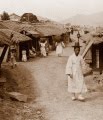
That said, two pictures is not a substantial amount of data, so I won't draw any conclusions about who walked where in Seoul in the 19th century just yet.

And now to the pictures:


이제는 우측보행입니다 - From now on it's walking on the right.

인간의 보행은 삶의 기본으로 신체 발달 특성과 어울려 편하고 안전해야 합니다. 그러나 우리나라의 '좌측보행'은 일제에 의해 강압적으로 바뀌어 우측성향을 가진 인간의 생활 편리성을 묵과한 채 오늘까지 이어져 왔습니다. - Walking is a basic part of life and has to be comfortable and safe in accordance with the developmental characteristics of the body. But Korea was forcefully changed during the Japanese occupation to one where people tend to walk on the left, and has continued until today to overlook comfort in the lives of people.

우리 몸에는 우측보행이 맞아요 - Walking on the right side is right for our bodies

미국, 캐나다, 독일, 오스트리아, 영국을 비롯한 대부분의 국가에서는 신체발달상 오른손잡이가 많은 점을 고려해 '우측보행'을 기본 보행방법으로 삼고 있습니다. 빌딩의 회전문이나 공항 출입구, 에스컬레이터, 지하철 개찰구 등 생활시설물이 모두 오른쪽으로 움직이는 것 또한 대부분 국가에서 적용하고 있는 국가적 관습에 맞춰진 것입니다. - Most countries including the US, Canada, Germany and Austria see walking on the right as a basic part of walking due to the large number of right-handedness in the development of the human body. The revolving doors in buildings, airport entrances, escalators, subway gates and so on all move on the right, and most countries have this applied in accordance with national habits.

좌측보행은 잘못된 보행문화 - Walking on the left is incorrect walking culture

우리 국민이 외국에 나가 길을 걸을때 외국인과 자주 부딛히고 외국인이 우리나라에서 이런 불편을 겪는 것은 바로 이와 같은 잘못된 보행문화 때문입니다. 사회적 혼란을 불러오고 국가경쟁력에도 장애가 되고 있는 좌측보행문화, 이제는 바뀌어야 합니다. - The reason why Koreans when they go abroad often collide with foreigners and why foreigners here in Korea encounter these inconveniences is because of this mistaken walking culture. Walking on the left, which brings social chaos and handicaps the competitiveness of a country, must now be changed.

우측보행! 송파구가 앞장서서 실천합니다. - Walking on the right! Songpa-gu (the part of the city where Jamshil is located) is moving ahead to put it into practice.

Read more...

Korean through signs: tutoring advertisement on the street

Monday, February 22, 2010


Today's image is that of an ad for tutoring that you can see on the streets pretty much everywhere, where someone who is going to a certain university offers to tutor other (usually high school) students. Tutors are popular because Korea is all about university entrance (after getting accepted university is pretty easy), and people that have already been accepted to a university will often best be able to help prospective students get into the same one. Of course, the pressure on them from the parents can be pretty immense as well since they shell out good money for the expectation that their son or daughter will then be able to attend the university the tutor is from.

The style in these advertisements is similar to what one might find in a resumé, with lots of hanja-based vocabulary in order to make it more concise. The suffix 시 (時) for example is used to mean "when", but in conversation people use 때. 시 comes from hanja whereas 때 doesn't, so 시 fits in better with the terms used here.


과외 - tutoring
서울대학교 - Seoul University. The English name is Seoul National University, and it's the best public university in the country.
동아리 - group, crew. This is right in front of the phone number so it's probably the name of the group that sets up the tutoring sessions, kind of a recruiting group.
기초 - basic
부터 - from. 기초부터 means from the basics.
체계적인 - systematic. 체계 by itself means system.
반복 - repetition
선행 - performance
학습 - study
Put all those together and we have 기초부터 체계적인 반복, 선행학습, or "Systematic repetition and performance(-based)/progressive study from the basics"
학생 - student
과 - and. 와 when there is no 받침 (a consonant on the bottom) in the preceding word, so "school and" would be 학교와, not 학교과.
선생님 - teacher
의 - possessive marker. Put these together and you get 학생과 선생님의, or Student and teacher's...
맞춤 - ready-made. 맞추다 means to fit something, and removing the 다 and then adding a ㅁ to the bottom makes it into a noun. After that add 수업, class, and it means a class that has been made to fit the student. There is also a 1:1 before that so that means one teacher and one student.
무료 - free (as in cost)
시범 - test. Test as in to try something out, not to take a test (which would be 시험).
강의 - class.
후 - after
수업 - class again.
결정 - decide. Put all these together and we have 무료 시범 강의 후 수업결정, or (you can) decide (whether) to take the class after a free test class. IOW, go in there once for free and see if you like it before you pay.
책임 - responsibility
성실 - sincere
시간 - time
엄수 - strict observance
철저한 - thorough
수업 - class
준비 - preparation. Put all this together and we have 책임, 성실 시간엄수 철저한 수업준비, or "Responsible, sincere, punctual (i.e. strict observance to time) and thorough class preparation".
방문 - visit. Put a 시 after it and it means "when", or when the teacher visits.
재학 - studying, currently studying.
증명서 - proof, certificate
졸업 - graduation
제출 - give, provide. Put all this together and we have 방문시 재학 증명서 졸업 증명서 제출, or "When (the teacher) visits, (he/she will) provide proof of enrollment and graduation". IOW, proof of the teacher's credentials.

Read more...

Korean through signs - no smoking signs on shoe shine stores on the streets of Seoul

Wednesday, February 17, 2010

The shoeshine shops on the streets here in Seoul until just last year were pretty rickety-looking and quite old, but just recently they've all been replaced with a more modern and (I assume) energy efficient design. On them you can also see these posters from the city government promoting no smoking in public areas (bus and taxi stops, parks and other areas as well I think).

I took two photos of this place and the second has more text so scroll down to below the second image to see what the text means.


First up in the background is a 부동산, a real estate agent. This is actually the same meaning as the French immobilier - the hanja for real estate means non-moving product(s) - 不動産.

Next is the top, which says 구두수선 - 광택. It's easy too:
구두 - shoes
수선 - repair
괭택 - shining/buffing. You can see this word at car washes too that buff cars.

And now the main sign:

함께 숨 쉬는 곳
언제나 금연구역

This means:

함께 - together
숨 쉬다 - to breathe
곳 - a place. Take off the -다 and add 는 to affix it to the noun in the same way as the English "that" (i.e. a relative clause), making "a place where (you can) breathe".
언제나 - always. Note that this is just when (언제) plus 나. You can do this with other words too like 누구 (who) + 나, making 누구나 (anyone).
금연 - no smoking. The opposite is 흡연.
구역 - region/area.

All together it means "A place where you can breathe together, an area that's always no smoking".

Next is this:

공공장소 금연은 이제 문화입니다.

공공 - public
장소 - place
이제 - from now on. Koreans will often colloquially say 인제 too.
문화 - culture
입니다 - is.

All together it means "no smoking in public places is now (part of the) culture".

걷기좋은 거리, 건강한 서울

걷다 - to walk. Replace 다 with 기 and you turn it into a noun (walking). Then add:
좋은 - good. From 좋다. 은 affixes it to the next noun, which is:
거리. Street. All together 걷기좋은 거리 means "a street that's good to walk (on)".
건강하다 - to be healthy. Just like 좋다 above we use ㄴ to connect it to the next noun, and that goes under 하 in 하다. 건강한 = healthy.
서울 - Seoul.
All together it means "Streets that are good to walk on, a healthy Seoul".

Read more...

Korean through signs: paint on the road in school zones

Monday, February 15, 2010

A picture I took yesterday shows what drivers see on the road when going through a school zone:


This one's very easy, and simply says
학교앞
천천히
lit. school-front slowly, or "go slowly in/when in front of the school". Just saying 학교앞 천천히 alone won't do in conversation of course. If you want to tell somebody to go slowly in front of the school, you'd have to use a full sentence like 학교앞에서 천천히 가주세요 / 운전하세요 (please go/drive slowly in front of the school).

Read more...

Korean through signs: ad on bus in Seoul promoting clean air

Thursday, February 11, 2010

The ad featured here is the one on the bottom (the one on the top is for a university).


The ad says:

제주도처럼
서울의 공기를 맑게
대중교통 이용으로
함께 만들어요!

제주도 - Jeju (the island in the south, known for nature and clean air)
처럼 - like, as
공기 - air. 서울의 공기 - Seoul's air
맑다 - clear. 맑게 - putting 게 here implies a state of becoming, so 서울의 공기를 맑게 means "(making) Seoul's air clean". The sentence is unfinished, but if you were asking someone to make Seoul's air clean you would add a 해주세요 (please do it) on the end, so 서울의 공기를 맑게 해주세요 means "please clean up Seoul's air".

대중교통 - mass transit
이용 - use, usage
으로 - with. Thus 대중교통 이용으로 = using mass transit
함께 - together
만들어요! - make (it)! The verb is 만들다.

All together, the ad means "let's work together with public transportation to make Seoul's air as clean as Jeju's!", in other words "take the bus as much as possible".

Read more...

  © Blogger templates Newspaper by Ourblogtemplates.com 2008

Back to TOP