Interlinear books are bilingual translations where the original has a translation right below each word or expression. Try them out on Interlinear Books.
For multilingual verb conjugation, try CoolJugator - a tool that can currently conjugate in dozens of different languages. It also recognizes forms and provides examples for each verb.
And by coincidence I found this on Christmas morning: a 50 minute interview in Spanish with Pope Francis that just happens to have Portuguese subtitles throughout as well. The subtitles really show that 1) the two languages are close enough that you could almost use one to write the other, but 2) you would still have to outright change about every tenth word.
Watching Spanish with Portuguese subtitles or the other way around (Catalan too) always feels like an alternate world where a less phonetic writing standard has been in use, something more akin to those used for English or French.
I haven't been writing here much recently, simply because I've been so occupied with reading. Maybe two months ago I came across this study showing the effects of massive amounts of reading (1+ million words) and how it compared to time spent abroad, and apparently the general rule is 1 million words equalled about the same improvement as a year overseas. This one here is interesting too, especially the chart a few pages down. That chart shows that the volume of text needed to be exposed to 10,000 words at least once is 600,000+ words. To see them three times each: 3+ million.
So I thought I would read The Wheel of Time (4+ million words) in two languages and see what a difference it makes. And also to truly get a feel for what a million words is like. A million is a lot of words. I'm currently halfway through book 5. I read up to book 8 in English before back in the 1990s, and decided that I would stop reading until the series was completed, which it was two years ago.
I don't like to treat Page F30 as a polyglot blog, given the limitations it places on what one can write about, but this spreadsheet might be interesting to readers.
Words means the number of words I've deleted that day (I use Readlang.com for this), words learning is the number of words registered there, and it goes up as new words are added and others I don't need to review anymore are deleted. Total is the total number of new words I assume have been put in my head since starting this, 1400 is just a number to make the graph look nice, pages is the number of pages read that day, words read is pages multiplied by 350. Then divide that by new words, which gives words per new word. That last column has turned out to be less meaningful than I thought because it depends on my mood whether I click on a word or not. Sometimes I feel like adding a word I kind of know but want to see a few more times anyway, and other times I don't.
On days off I can read 20,000+ words, on work days I can get 10,000 words in, sometimes fewer.
Date
Words
Running total
Words learning
Total
Pages
Words read
New words
Words per new word
July 7
22
201
720
921
1400
61
21350
45
474,44
July 8
25
226
751
977
1400
56
19600
56
350,00
July 9
25
251
792
1043
1400
68
23800
66
360,61
July 10
45
296
772
1068
1400
56
19600
25
784,00
July 11
137
433
652
1085
1400
30
10500
17
617,65
July 12
33
466
664
1130
1400
63
22050
45
490,00
July 13
16
482
670
1152
1400
31
10850
22
493,18
July 14
8
490
693
1183
1400
45
15750
31
508,06
July 15
2
492
715
1207
1400
39, on page 685
13650
24
568,75
July 16
13
505
734
1239
1400
102, on page 39
35700
32
1 115,63
July 17
2
507
737
1244
1400
29, on page 68
10150
5
2 030,00
July 18
110
617
637
1254
1400
21, on page 89
7350
10
735,00
July 19
120
737
535
1272
1400
64, on page 153
22400
18
1 244,44
July 20
55
792
490
1282
1400
41, on page 194
14350
10
1 435,00
July 21
41
833
456
1289
1400
19, on page 213
5795
7
827,86
July 22
39
872
431
1303
1400
17, on page 230
5950
14
425,00
July 23
18
890
418
1308
1400
13, on page 243
4550
5
910,00
July 24
36
926
423
1349
1400
34, on page 277
11900
41
290,24
July 25
35
961
415
1376
1400
29, on page 306
10150
27
375,93
July 26
18
979
450
1429
1400
54, on page 360
18900
53
356,60
July 27
24
1003
449
1452
1400
40, on page 400
14000
23
608,70
July 28
24
1027
448
1475
1400
40, on page 440
14000
23
608,70
July 29
8
1035
449
1484
1400
25, on page 465
8750
9
972,22
July 30
36
1071
453
1524
1400
47, on page 512
16450
40
411,25
July 31
52
1123
453
1576
1400
82, on page 594
28700
52
551,92
So let's let to the other items in the title.
Armenian Wikipedia: I remember being disappointed at its tiny size a year or two ago, and apparently it has exploded since then due to a national campaign to have everyone write one article each. Here's one video encouraging Armenians to contribute:
Rosetta: the mission, not the language learning software. I an extremely pleased with them releasing daily images of the comet as Rosetta approaches. Dawn had better do something similar when it approaches Ceres in the next few months, as the lack of images during the Vesta approach was simply unacceptable.
Gaza tunnel diggers: This documentary with French subtitles is one of the more interesting documentaries I've seen in a while. It is a few years old, and is just 50 minutes of following a few of these tunnel diggers around as they do their thing. It has music but no extra commentary, which is great. A documentary without the typical dozens and dozens of quips from specialists speaking on the matter in their office is a rare treat.
This chart showing the number of deaths per TWh by energy source. Coal is of course right near the top at 161 deaths, oil is next at 36, natural gas is way behind at 4, biomass is 12, peat is 12. After that we have the final two stragglers: hydro at 1.4, and nuclear is the dunce of the deaths per TWh class at just 0.04.
This letter by Papa Francesco to La Repubblica made news a few weeks ago, as it's not very often that one of the letters to the editor is submitted by the Pope. The letter was submitted in response to another letter about secularism and non-belief.
Radio-Canada has a section containing a number of articles about the subject Le Québec, producteur de pétrole? which goes into much more detail than one would usually see on a website about the subject, with what appears to be about 30 links on Quebec's potential to join the 36 per TWh club.
A "translation" of the Bible into Texan. The translation is actually just replacing the word you with y'all when the original is the plural you, which actually makes it more precise. Without the loss of thou English wouldn't have needed all the substitutes we have: y'all, your guyses, etc.
The last time we took a look at the number of papal Twitter followers there was a total of about two million followers across all the languages offered, and now, after closing for a bit and reopening with Pope Francis, the number is 4 million. Let's compare the number of followers by language compared to last time to see which language is showing the most growth.
I was watching the announcement live yesterday and was pleased to hear Latin spoken for the first time in a while. My Latin not being especially good, I thought after hearing that either: 1) the Pope's name is Francisco, or 2) something to do with the Franciscan Order that I didn't understand was announced. Luckily it was the former.
I found the following on the Portuguese Wikipedia giving the Latin announcement with translation in Portuguese:
Annuntio vobis gaudium magnum:
Anuncio-vos com grande alegria
habemus Papam!
temos um Papa!
Eminentissimum ac Reverendissimum Dominum,
O Eminentíssimo e Reverendíssimo Senhor
Dominum Georgium Marium
D. Jorge Mario
Sanctæ Romanæ Ecclesiæ Cardinalem Bergoglio
Cardeal da Santa Igreja Romana, Bergoglio
qui sibi nomen imposuitFranciscum.
que adotou o nome de Francisco.
After a quick glance at some other Romance Wikipedias I don't see a translation in any of them.
Read more...
Interesting piece here in Portuguese on the importance of Latin in the Vatican, where the Italian reporter Giovanna Chirri was the first to hear about the upcoming resignation of the Pope due to being able to understand his Latin spoken in a ceremony the previous day where he remarked that he had "important news for the future of the church, and that he was getting old".
The title and text of this post are courtesy of Olivier Simon, who has not only found the Latin text of Pope Benedict XVI's announcement today (which is the language the announcement was made in), but has also made an interlinear translation below for our benefit.
Fratres carissimi Non solum propter tres canonizationes ad hoc Consistorium vos convocavi,
Brethren dearest. Not only because-of three canonizations to this Consistory I have-summoned
sed etiam ut vobis decisionem magni momenti pro Ecclesiae vitae communicem.
but too so-that to-you (a) decision of-big importance for (the) Church’s life I-communicate
(Nota : IMO, we should have gotten the ablative “vitâ” instead of “vitae”)
Conscientia mea iterum atque iterum coram Deo explorata ad cognitionem certam perveni
By-conscience my again and again in-front-of God explored [refers to “conscience”] to knowledge sure I-have-come
vires meas ingravescente aetate non iam aptas esse ad munus Petrinum aeque administrandum.
(that) strengths my by-heavier-getting age no more capable be to function Petrine [« of Saint Peter »] steadily administrate
Bene conscius sum hoc munus secundum suam essentiam spiritualem
Well aware I-am that function according-to its essence spiritual
non solum agendo et loquendo exsequi debere, sed non minus patiendo et orando.
Not only by-acting and by-speaking be-performed must, but not less by-suffering and by-praying
Attamen in mundo nostri temporis rapidis mutationibus subiecto et quaestionibus magni ponderis pro vita fidei perturbato
However in world of-our time to-swift mutations subjected and by-questions of-big weight for (the) life of-faith perturbated
ad navem Sancti Petri gubernandam et ad annuntiandum Evangelium etiam vigor quidam corporis et animae necessarius est,
to (the) ship of-Saint Peter govern and to announce (the) Gospel too force certain of-body and soul necessary is,
qui ultimis mensibus in me modo tali minuitur,
that (during these) last months in me in-manner such has-decreased
ut incapacitatem meam ad ministerium mihi commissum bene administrandum agnoscere debeam.
That incapacity my to ministry to-me bequeathed well administer aknowledge I-must
Quapropter bene conscius ponderis huius actus plena libertate declaro me
That’s-why well aware of-weight of-this act in-full freedom I-declare (that) I
ministerio Episcopi Romae, Successoris Sancti Petri, mihi per manus Cardinalium die 19 aprilis MMV commissum renuntiare
(the) ministry of-Bishop of-Rome, of-Successor of-Saint Peter, to-me by (the) hands of-Cardinals day 19 aprile 2005 bequeathed renounce
ita ut a die 28 februarii MMXIII, hora 20, sedes Romae, sedes Sancti Petri vacet
this-way so-that from day 28 February 2013, hour 20, (the Holy) see of-Rome, (the Holy) see of-Saint Peter be-empty
et Conclave ad eligendum novum Summum Pontificem ab his quibus competit convocandum esse.
and (that the) conclave to elect new Supreme Pontiff by those to-whom it-suits to-be-convened is.
Fratres carissimi, ex toto corde gratias ago vobis pro omni amore et labore,
Brethren dearest, from whole heart thanks I-do to-you for all love et work,
quo mecum pondus ministerii mei portastis et veniam peto pro omnibus defectibus meis.
whither with-me (the) weight of-ministry my you-have-carried and pardon I-beg for all failings my.
Nunc autem Sanctam Dei Ecclesiam curae Summi eius Pastoris, Domini nostri Iesu Christi confidimus
Now so (the) Holy of-God Church to-care of-Supreme its Shepherd, Lord our Jesus Christ we-entrust
sanctamque eius Matrem Mariam imploramus, ut patribus Cardinalibus in eligendo novo Summo Pontifice materna sua bonitate assistat.
holy his mother Mary we-implore, so-that fathers Cardinals in electing new Supreme Pontiff motherly her goodness assists
Quod ad me attinet etiam in futuro vita orationi dedicata Sanctae Ecclesiae Dei toto ex corde servire velim.
What to me pertains even in (the) future life to-prayer dedicated to-Holy Church of-God whole from heart serve I-want.
Ex Aedibus Vaticanis, die 10 mensis februarii MMXIII
From Palace Vatican, day 10 of-month February 2013.
Two new languages are planned for the Pope's Twitter feed, Chinese and Latin. Neither is too much of a surprise in that Chinese is a no-brainer for PR and Latin is basically a must. Latin is particularly nice to see, however, given the lack of places to read and use it. Latin students and revivalists should follow that Twitter account, along with any other 100% Latin Twitter account around.
While we're at it, let's see how the number of Twitter followers has changed since those I wrote on December 7th. Dec 7 numbers will be on the left, today's numbers on the right.
An article here gives us the numbers for the Pope's current Twitter followers by language. Easy enough to find out without such an article, but the idea never occurred to me to lurk the Pope's Twitter feed. So here they are:
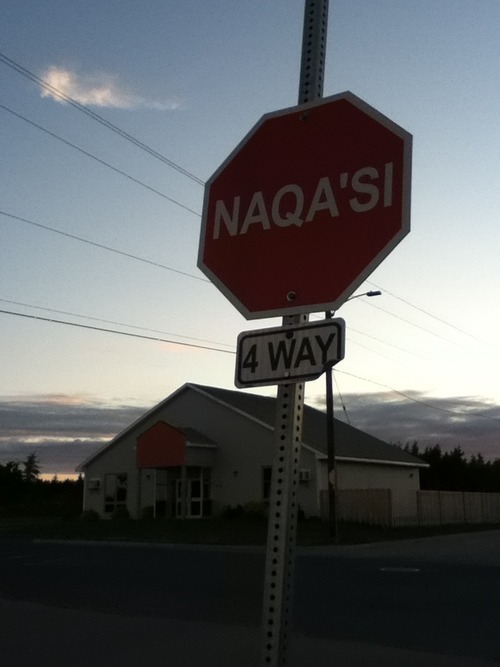
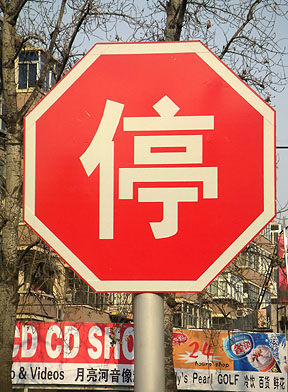
--- Stop signs in three languages: this and this one are endangered, this one isn't. Signage is about the easiest way to give an endangered language exposure where it otherwise would only be spoken at home, if that.
--- De Waarheid over Esperanto en Ido on Project Gutenberg, in Dutch with French translation below. Apparently it's by a member of the committee from way back when Ido was first proposed who preferred Esperanto. The Ido featured in the book is a bit archaic.
--- The Pontifical Academy of Latinity has now been established. Some of the quotes from the article are pretty interesting, as the revival of Latin is seen by many in the church as being necessary to achieve a certain clarity of thought and to understand church doctrine. Along with that one also gets to read thousands upon thousands of ancient to medieval texts without needing a translation.
There's an embedded video in an article here today that I found rather interesting. The discussion is whether a politician's personal beliefs should be an issue in an election, and is divided between these two:
1) Personal beliefs that have an effect on public policy (women's rights, abortion, etc.)
2) Personal beliefs that have little or nothing to do with public policy (transubstantiation, perhaps things like karma, dream interpretation, etc.)
They were all in clear agreement that #1 deserves to be in the public sphere - nobody should be able to hide bigotry in a veil of spirituality. #2 had far less agreement, with most saying that it was an irrelevant issue. Dawkins did not agree, seeing these as a weather vane of sorts for someone's critical thinking ability or lack of it.
Two thoughts on this:
1) A great many people vote on so-called fringe issues, issues that are important to individuals but irrelevant to most. For Dawkins a person's private beliefs are very important when deciding whom to vote for, for me my fringe issue is space. It is unfortunate that it is a fringe issue, but space policy is hardly ever mentioned in an election campaign. So let's think this through:
- Is space my only issue? No - I could not see myself voting for Gingrich over Obama (if I were American) simply because he loves space and references it frequently. However:
- I would have a really hard time voting for anyone who actively belittles it. The phrase "why should we spend money on space when there are so many problems at home to fix?" is for me a near instantaneous disqualifier, and anyone that believes that to me is seriously lacking in insight. Not only is the amount we spend on space a pittance, but the benefits it reaps are enormous, and not being able to understand this is a serious flaw. There is one possible exception here: a candidate that is simply parroting a talking point and has not given much thought to funding space. Checking the candidate's history to see if he is liable to change his mind upon being presented with new data is a good way to find out.
- Would I vote for a candidate I otherwise wouldn't vote for, but don't actively dislike, because of space policy? Yes, I could. That means that an imaginary American me could easily vote for Huntsman over Obama, possibly another GOP candidate if their plan for space is fantastic. I have yet to see one though. Obama unfortunately is not all that interested in space, and his statement that "we've already been to the moon" bugged me. Not we, a previous generation that has mostly died out went to the moon, and we cannot even make it there in 2012. We have been to LEO, nothing else.
2) Tying in advocacy of evolution and scientific literacy with advocacy of atheism is a bad idea. Assuming that scientific literacy is the most important idea to spread, consider the following two statements:
-- Evolution is true because blah blah, science is interesting and useful because of blah blah
-- Evolution is true because blah blah, science is interesting and useful because of blah blah, once you understand this you will also lose your faith. It is either one or the other.
The second statement is a much harder sell; moreover, it is useless ballast to anyone who actually believes that scientific literacy causes people to give up their religion. If understanding science = giving up religion, why even throw religion into the mix at all?
To demonstrate this even more effectively, consider the following examples. An advocate for socialism, and an advocate for Ron Paul-style unfettered capitalism.
The former:
-- Raising taxes for the rich and using it to fund social programs is a good thing because a society that helps the weakest is stronger for it.
-- Raising taxes for the rich and using it to fund social programs is a good thing because a society that helps the weakest is stronger for it. Once you understand this you will also be a proud socialist.
The latter:
-- Lowering taxes and shrinking the size of government is good because it helps individuals, businesses and society itself reach its full potential.
-- Lowering taxes and shrinking the size of government is good because it helps individuals, businesses and society itself reach its full potential. Once you understand this you will be a proud libertarian like me.
Read more...
News.va, the the site that collects sources of information of the Vatican, will soon be available in Frenche, and in a month in Portuguese. This is in addition to the three languages already available: Italian, English and Spanish.
With this, a year after its birth, the site will have five languages. This was announced to journalists today by Msgr. Claudio Maria Celli, president of the Pontifical Counsil for Social Communications.
According to him, News.va has 8,000 to 10,000 hits a day, with points up to 16,000.
Of the 180 countries that visit the site, 27% are from the US, followed by Europe (Italy, Germany, Spain), Canada, and Brazil. 52% of the total are new visitors, while 47% are frequent visitors who come regularly. Entrance to the site is usually through social networks: 65% come through Facebook, 30% through Twitter.
ţThe Afrikaans Wikipedia, which I often praise for its detailed articles in spite of its small overall size (20 402 articles at the moment), has a very detailed front page article this week on the Eastern Orthodox Church (Oosters-Ortodokse Kerk). A quick glance at other languages shows this article to be about twice the size of the one in its sister language Dutch.
Read more...
Regular readers will know that one of my favourite sources of audio with matching text for rare languages is this site here with the entire New Testament recorded in at least a few hundred languages, including a good number of creoles (Tok Pisin, Bislama, Haitian Creole, more) and rare languages like Ossetian/Ossetic, and Kalmyk. Just a year or two ago the amount of free online content with matching audio for these languages was virtually nonexistent. The site now even has a version in (Church) Latin.
They have announcements on the front page on new languages that have been added, but much of the time they neglect to mention every time a new language has been added. Such was the case with Latin: around August or September I read an article on the recording in Latin and that it would be released around October, then in October it was nowhere to be found, and later on in November, lo and behold, the Latin version of the New Testament had been snuck into the list of languages.
Because of this, every few weeks I will tend to do searches for languages I know and like, and sometimes even scroll through the entire list to see if anything jumps out. This week I noticed a language that wasn't there before: Portuguese.
Portuguese - well, that's certainly going to be Brazilian Portuguese, because it's always Brazilian Portuguese. Nevertheless I clicked on the language and had a listen...and it turned out that it was European Portuguese, a wonderful surprise given its relative rarity.
Next question was: which translation? According to the site it is a Bíblia para todos, which sounds like a new translation, and it is. That translation's official site also has a piece of news dated 25 November about the recording. Part of it goes as follows:
The New Testament now can be heard in Portuguese, recorded in Portugal. The 27 books that make up this part of the Bible are now available in audio format, in an effort that came from the hand of the Sociedade Bíblica...it has the impressive duration of approximately 21 hours and is the result of a month and a half of recordings, in which 25 professional actors gave their voice to all the characters in the New Testament. Jesus Christ was done by the actor Simon Frankel, known to the public as the voice actor for the Portuguese Tintin in the movie "The Adventures of Tintin". Adelaide de Sousa (Samaritan woman), Fernando Luís (Satan) and Heitor Lourenço are other recognizable voices..."a Bíblia para todos" is the most current Biblical text in Portuguese, and has been available in book form since 2009. This version is characterized by the usage of current and accessible language to people with different ages and instructional levels...the translation took 30 years and was done by Catholics and Protestants.
...and so on. To make a long story short, this is a great resource to have for learners of European Portuguese.
Read more...
A few weeks after the original planned October release date, Faith Comes By Hearing now has a Latin version of the New Testament (go here, scroll to the bottom and do a search for Latin). The Latin version is halfway between the non-drama and drama New Testaments they have there, with various voices for various characters, but none of the same music and sound effects one hears in the other dramatic versions. However, each book and letter begins with some Gregorian chant.
And with that you should be able to guess what kind of Latin it was recorded in: it's ecclesiastical Latin, not classical. That means that v is like the English v, c before e and i is ch, g before e and i is like g in giraffe, t before e and i is ts, ae is e, gn is ny, there don't seem to be any long vowels, etc.
The Latin text used is the Nova Vulgata, which you can select here along with a ton of other languages next to it for comparison.
And in other news: starting tomorrow the entire Roman Catholic church will be using a new missal (in English at least, not sure about other languages). By pure coincidence I happened to attend a church last Sunday for the baptism of a friend's baby, so I was able to hear the current missal for the last time. There were a lot of mentions during the service about how this was the end of the current missal, and that the next one would begin the next week. What makes the next missal different from the current one is that the translation is more literal in relation to the original Latin.
One of the most obvious changes is explained here, the change from "and also with you" to "and with your spirit":
‘And with your spirit’ is the literal translation of what we find in the Latin text, ‘et cum spiritu tuo’. This translation is already found in other languages, for example, German, Italian, French and Spanish.
Scripture is very much the source for this dialogue between priest and people. In four letters of St Paul he uses the following greetings: Galatians 6:18 – ‘May the grace of our Lord Jesus Christ be with your spirit’; Philippians 4:23 – ‘The grace of the Lord Jesus Christ be with your spirit’; 2 Timothy 4:22 – ‘The Lord be with your spirit’; Philemon 25 – ‘The grace of the Lord Jesus Christ be with your spirit’. Similar greetings can be found in the Old Testament.
For four weeks this summer, the group gathered in the crypt of an old Franciscan monastery in Newark, N.J., for the recording sessions. Stravinskas said with the recording finished by the end of July, the entire project is expected to be finished by October.
Late! But beggars can't be choosers - if they're late then we will wait. Very curious to see which pronunciation the whole thing has been recorded in. I expect it would be Ecclesiastical considering that priests have been involved, but then again there are also:
(in bold)
The 15 men and women chosen for the recording project include priests, teachers, graduates of classical studies programs and an accountant — all who share a passion for the Latin language.
Let's just hope it's not a mixture of both.
Read more...
The front page article on the Portuguese Wikipedia at the moment is this one:
It's about the (Roman Catholic) Diocese of Macau, and given that it goes into way more detail than the English version it's worth reading (or using Google Translate to read) for anyone interested in Macau, and Portuguese in Macau in particular.
It has a lot of numbers and other information:
"In 2004, the Diocese of Macau had approximately 18,000 to 27,500 Catholics. In 2008, the number grew to 28,700 - about 5.3% of the total population...the liturgy is usually celebrated in Chinese, Portuguese and English...according to article 34 of the Basic Law of the Special Administrative Region of Macau, "the residents of Macau enjoy freedom of religious belief and the freedom to pray, to promote religious activities in public and to participate in them...(article 128) the government of Macau does not interfere in internal subjects of religious organizations, nor their maintenance or the development of relations of religious organizations and their believers with believers outside Macau..."
and so on. Well worth the time it takes to read.
Read more...
A few days ago I wrote about an excellent resource I found for a large number of rare languages, a site with dramatized audio versions of the New Testament. Dramatized means having more than one speaker plus music and some sound effects, as opposed to one person recording the whole thing all by him/herself. In that post I mentioned that Estonian and Mongolian have not yet been recorded.
However!
Yesterday I found an Estonian version, and after all this searching through YouTube and Eesti Raadio and all the rest for audio content with text it was surprisingly easy. Going to the Estonian Wikipedia I went to the Uus Testament page, and lo and behold there was a link to audio files of the whole thing. Not a dramatic version, but since Estonian has been extremely difficult to find, this is now the best source of audio + matching text for Estonian I know of.
As for Mongolian: still haven't been able to find large amounts of Mongolian audio with text. I did notice however that the same site has the NT in Kalmyk, which I overlooked the first time as Kalmyk is simply a language you don't expect to see and it never occurred to look for that. This page has pdfs of all the books and letters that make up the NT. Since Mongolian is not yet my specialty I asked a friend of mine who has studied it and he said that Kalmyk sounds extremely different. On the other hand I have noticed comments on YouTube videos with Kalmyk speech from Mongolians that say it was very easy to understand. In any case, Kalmyk has always been appealing to me since it's a type of Mongolian that is spoken in a part of the world that doesn't completely freeze over during the winter (and is close to Armenia/Azerbaijan/Iran/Turkey). Mongolian even has a word (zud) for a particularly harsh winter, defined as:
A zud or dzud (Mongolian: зуд) is a Mongolian term for an extremely snowy winter in which livestock are unable to find fodder through the snow cover, and large numbers of animals die due to starvation and the cold.
Yeah, I don't think I'd like zud.
Let's compare the weather for Ulaanbaatar (the coldest capital in the world) and Elista, the capital of Kalmykia, for the next four days.
Unfortunately Kalmyk is a minority language even in the places where it is spoken (last census gives 52% Kalmyk but it's doubtful that they are all fluent), and the region's president (correction: ex-president as of two months ago) is a bit nutty. Then again, Kazakhstan's Nazarbayev has just found a way to skip the next two presidential elections so being somewhat nutty and very power hungry is pretty much par for the course for the Caucasus to Central Asia.
Read more...
It's Christmas day and there are a number of things worth mentioning so let's just put everything together and see what happens.
First of all, I've written two posts on 90 Years Ago Today since I last mentioned it here, as I don't always make a note of it on Page F30 when I do. The US has elected a new president and the League of Nations is shiny and new. It's Christmas 1920 and 1921 is just around the corner.
Over in Occidental land I've just finished uploading Cosmoglotta to 1930. I've never read old issues of Cosmoglotta before so I'm watching the progression of the language for the first time, and though by 1930 it mostly resembles the Occidental of today and the language went through quite a bit of fine tuning that year, it still has the apostrophe that denotes a very soft y sound here and there.
In Sambahsa land Olivier has finished translating another movie, this one a fan-made Star Wars movie called Revelations. I watched it once back in 2006 or so and don't remember a great deal about the story. I believe this makes four movies that we have subtitles in Sambahsa for: The Hunt for Gollum, Born of Hope, The Man from Earth, and this one.
Dawn is now just 9 million km away from Vesta, or just 6% the distance from the Earth to the Sun (23 times that from the Earth to the Moon). The chief engineer updates at the end of every month and I had hoped he would mention when they expect to take and release their first images of Vesta during the last two but nothing so far. In under a week we should see the next update here, and maybe he'll bring up the subject. Because entering orbit with an ion engine requires a lot more finesse than your typical chemical engine, it will continue to slow down more and more compared to Vesta until it finally achieves the same orbit, when finally a tiny thrust will be enough to enter orbit. This is why it's still going to take seven months to 'arrive' even though it's already at an extremely close distance. Your average interplanetary probe flying by an object would cover this distance in just ten days or so.
More on Martin Gaskell, the astronomer who is suing the University of Kentucky for religious discrimination: for some debate and background on the case see these threads here and here.
Want to compare the altitude of two locations? You can do that here. Click on one location on the map, click on another, then to the right of that select draw profile and you'll end up with something like this.
It's potentially quite useful when looking for a place to live in a city with a varied topography, as lower generally = warmer and less windy. There's a world of difference between a house in the suburbs in the hills and away from downtown compared to a south-facing apartment by the river near downtown, which benefits not only from the lower altitude and less wind but also the heat island effect being near downtown brings. In the end this is only a couple of degrees, but when gardening this makes a huge difference:
A superb example of a unique microclimate is the Calgary Zoo and Botanical Gardens’ site on the flood plain of the Bow River which has become a resource to many Southern Alberta gardeners. The gardens benefit from river moisture and a high water table in well-drained sandy soil. There is a good canopy of mature trees and bushes designed in part to protect much of the area from the extremes of wind, hail, rain and sun; the soil has been cultivated and well mulched for decades by expert gardeners. Extra heat is provided because of the proximity to the downtown core and the nearby major traffic routes. A consequence of all these factors is an array of trees, shrubs, annuals and perennials that thrive in a few communities in Calgary, but can be replicated in some areas of many gardens, especially near downtown Calgary and within the Bow and Elbow flood plains. The Perennial Trial Gardens sites at the zoo, Olds College and at the Muttart Conservatory in Edmonton test and publicize plant varieties that should grow well over much of south-central Alberta. At the zoo, some of the more unusual trees include the Manchurian walnut, and linden, but some “exotics” like the Hick’s yew (Taxus x media ‘Hicksii’) can be susceptible to winter kill.
My favourite new Portuguese band: Madredeus.
I found out about them (and a number of other singers and bands) on Yahoo! Answers of all places.
Read more...